I ran across a question posted to Yahoo Answers recently that read something like "I just got an espresso machine for Christmas. What are the best beans to use"? The answer was "Any dark roast. French roast would be good".
I don't think the person who posted the answer really had a clue and expressed the common misconception that espresso roasts are dark. The fact is that French roast would be about one of the worst roasts to use for espresso. I know; I've tried them myself. You definitely won't be getting any crema out of French roast and altogether it will be a very unsatisfactory outcome and for the beginner at home something that is likely to put them off home espresso brewing completely not knowing that the wrong beans were recommended.
Actually, most of the best espresso roasts are light to mid-roast. What is known as "city roast" is a mid-roast and is the type of roast that is used for the best espresso-based drinks that come from the best coffee shops.
Dark roasts get to the point where the oils of the bean are being forced out through the outer hard shell of the coffee bean because of the extra roasting time and heat. The beans are dark, shiny, and wet looking. If that's how your beans look, then you won't be getting any crema out of them. Use them for filter coffee of French press/plunger coffee. Beans that you use for espresso, even if a darker roast, should look dry without any evidence of the oils having come to the surface of the bean during roasting.
The best option for getting beans that are perfect for making espresso at home is to buy them from a local independent roaster. This way you know they are fresh and you can ask them for a recommendation. A good way to start is to ask them which roast they use to make espresso in their cafe and give those a shot.
But a local roaster is not an option for everyone especially if you don't live in an urban area. On top of that. local roasters tend to charge quite a lot for their beans. So here's my personal recommendation for beans that taste good and work very well for creating great crema at home. And the great thing is that you can order them at Amazon so won't even have to leave home. Put them on a monthly "subscribe and save" order, and save even more. Coffee Masters Gourmet Coffee, Ethiopian Yirgacheffe, Whole Bean, 12-Ounce Bags (Pack of 4). (Note: As of November 2015 I am still using these beans as my stock beans at home. I have been getting these beans each month for almost 3 years now! That's why I can recommend them without reservation.)
Ed. Note: In early 2011 I found these fantastic beans that are excellent for making espresso coffee, great-tasting and reasonably priced at Amazon. Currently these are the only beans I am using. Give them a try yourself and see if agree: Great Value Coffee Beans Suitable for Espresso.

Espresso Coffee Snobs
The Golden Rule of Perfect Espresso
By now you've probably studied my 9 steps to making perfect espresso coffee and the separate section on making perfect crema. In the section on making perfect crema, I made reference to "The Golden Rule" that you see frequently quoted, which is: "Extract 2 to 2.5 ounces of coffee into your cup in 20 to 30 seconds from the moment you turn on the pump."
I have a completely different Golden Rule for making perfect espresso coffee that I am going to share with you now.
New Zealand where I grew up has an even more deeply entrenched "espresso coffee culture" than the United States, and there is one significant difference in how espresso coffee is made in New Zealand cafes and coffee shops. That key difference is this: in the United States the espresso is typically brewed into a pitcher and then poured into the cup.
In New Zealand, and many other countries for that matter, the espresso is brewed directly into the cup from which is will be drunk. This one simple difference makes a huge difference in flavor. Why? The crema!
Crema is the caramelized coffee sugars and coffee proteins that float on top of a well-brewed espresso coffee, and carries with it immense aroma and flavor. If you've had espresso and not liked it, it may have been because the "barista" didn't do a good job of making the espresso and literally threw most of the crema down the drain! How so? Quite easily; by using the technique popular in the U.S. of brewing the espresso into a pitcher and then pouring it into the cup, most of the crema is left clinging to the sides of the pitcher, to be washed down the drain. What a crying shame! But it happens millions of times all over the U.S. every day in every Starbucks, and other coffee chains you frequent. Why do they do it?
Espresso crema - the liqueur of coffee.Crema consists of caramelized coffee sugars and coffee proteins. It will be formed only when you brew your coffee at the right pressure and right temperature. Read here about how to make perfect crema.
Here's an illustration of what I mean. I brewed an espresso into a glass demitasse cup so you can clearly see the caramel-like foam on the top called "crema". Sometimes it may even appear milky-white when looking down on it, hence the name "crema".
 Then I poured the espresso out into another cup. Look at all the crema left behind on the sides of the demitasse cup! The same thing happens when the coffee is extracted into a stainless steel pitcher and then poured into a cup.
Why do American coffee shops wash cream down the drain?
So that's my Golden Rule: Make your espresso directly into the cup from which you are going to drink it! Don't be guilty of washing your crema down the drain. You'll be amazed at the difference in flavor!
I have a completely different Golden Rule for making perfect espresso coffee that I am going to share with you now.
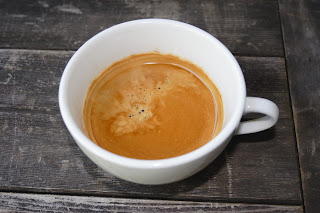 |
| Crema floating on top of an espresso |
In New Zealand, and many other countries for that matter, the espresso is brewed directly into the cup from which is will be drunk. This one simple difference makes a huge difference in flavor. Why? The crema!
Crema is the caramelized coffee sugars and coffee proteins that float on top of a well-brewed espresso coffee, and carries with it immense aroma and flavor. If you've had espresso and not liked it, it may have been because the "barista" didn't do a good job of making the espresso and literally threw most of the crema down the drain! How so? Quite easily; by using the technique popular in the U.S. of brewing the espresso into a pitcher and then pouring it into the cup, most of the crema is left clinging to the sides of the pitcher, to be washed down the drain. What a crying shame! But it happens millions of times all over the U.S. every day in every Starbucks, and other coffee chains you frequent. Why do they do it?
Espresso crema - the liqueur of coffee.Crema consists of caramelized coffee sugars and coffee proteins. It will be formed only when you brew your coffee at the right pressure and right temperature. Read here about how to make perfect crema.
 |
| Crema! in Stylish Glass Espresso Cup with Stainless Steel Handle |
Why do American coffee shops wash cream down the drain?
So that's my Golden Rule: Make your espresso directly into the cup from which you are going to drink it! Don't be guilty of washing your crema down the drain. You'll be amazed at the difference in flavor!
Subscribe to:
Posts (Atom)
Featured Post
How to Make Perfect Espresso Crema
Crema is the essence of good espresso coffee. I like to think of it as the Holy Grail of espresso coffee. Without it you might as well pour ...

Popular Posts
-
 What is a "Flat White"? Flat White Coffee in Tulip Cup More photos of flat-whites Flat White is an espresso-based drink ...
 -
Here's another great espresso bean find from one of the Seattle roasters. Victrola Coffee Roasters has two locations in Seattle, one ...
-
 Crema is the essence of good espresso coffee. I like to think of it as the Holy Grail of espresso coffee. Without it you might as well pour ...
 -
Please note that this section of Espresso Coffee Snobs is no longer updated. For the latest updates please go to https://espressocoffeesno...
-
What are Espresso Beans? Actually, there is really no such thing as an espresso coffee bean per se. "Espresso" refers to the met...
-
Update as of December 2016: It appears that the Breville Dual Boiler BES900XL that is the subject of my below review has been replaced...
-
Espresso: Coffee drink made by extracting coffee under pressure from finely ground coffee beans using very hot water (Italian: Caffe French...
-
Damn Consumer Reports! The cover story for their latest edition is "The Great Gift Guide - Top products of the year based on style, per...
-
What to Look for in a Good Espresso Maker for the Home If you're going to make that perfect cup of espresso coffee, you're going ...
-
The essential difference between the various espresso-based drinks is the milk that is added to the espresso and the ratio of milk to espres...


